Using a Firewood Moisture Meter: What to Read
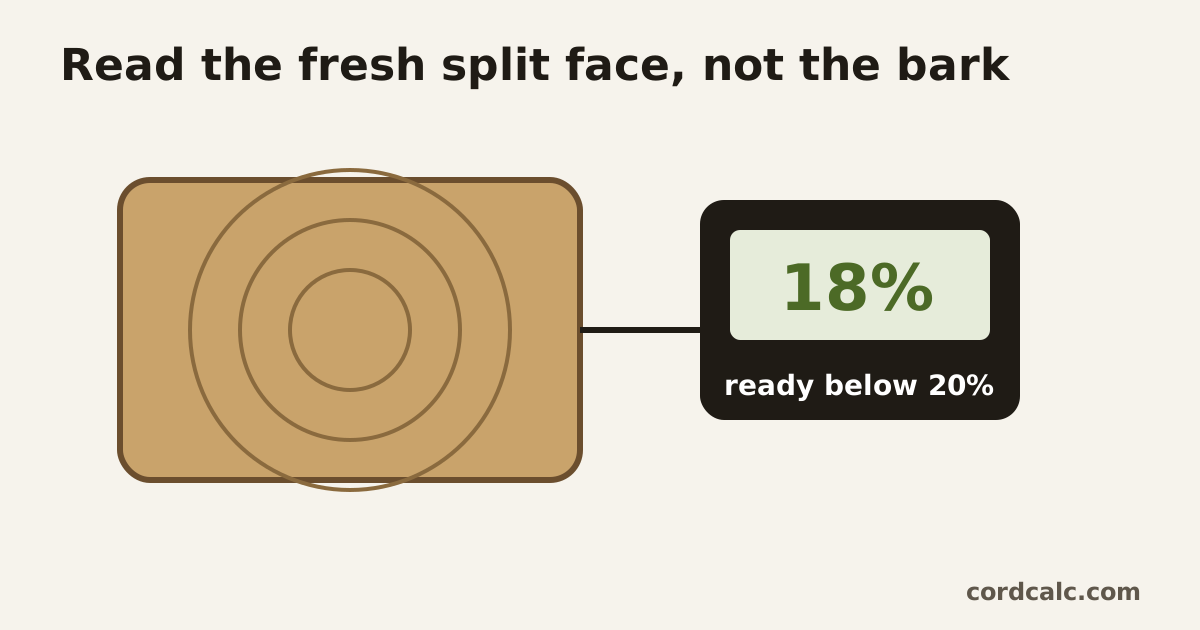
Firewood is ready to burn when a moisture meter reads below 20% on a freshly split face. That threshold comes from both the CMHC wood-heating guide and University of Maryland Extension, which adds that wood above 20% is harder to light, gives less heat and raises the risk of a chimney fire from creosote.
How to take a reading
- Pick three pieces from different parts of the stack: one from the middle, one from the bottom, one from the side facing the weather.
- Split each one and test the new face straight away. Maryland Extension is explicit: test the inside of the log, not the outside, because the surface dries first.
- Push the pins in along the grain halfway between the bark and the centre, and read the percentage.
- Go by the highest reading. One wet piece in a load cools the fire.
What the numbers mean
| Reading | What it means |
|---|---|
| Above 35% | Close to fresh-cut (35–50%, CMHC); months from ready |
| 20%–35% | Drying; give it more time under cover |
| Below 20% | Seasoned |
The heat-per-cord figures in the firewood BTU chart assume dry wood; Kentucky's table states 20% moisture. Burning wetter wood means some of that heat goes to boiling water, so the woodpile shrinks faster than the calculator predicts.
Buying wood sold as seasoned
A meter settles arguments with a seller in a minute. If a load sold as seasoned reads well above 20% inside, it will need more drying time; stack it as described in how to season firewood and burn last year's wood first.
Cord Calc has no affiliate links and does not recommend a meter brand; any pin meter with a wood scale reads the number this guide uses.
Sources
- CMHC, A Guide to Residential Wood Heating.
- University of Maryland Extension, FS-937.
Questions
What should a moisture meter read for firewood?
Under 20%. The CMHC guide and University of Maryland Extension both put seasoned firewood below 20% moisture content.
Where do you test firewood with a moisture meter?
On a freshly split face in the middle of the piece. University of Maryland Extension advises splitting pieces and testing the inside, because the outside dries first and reads low.